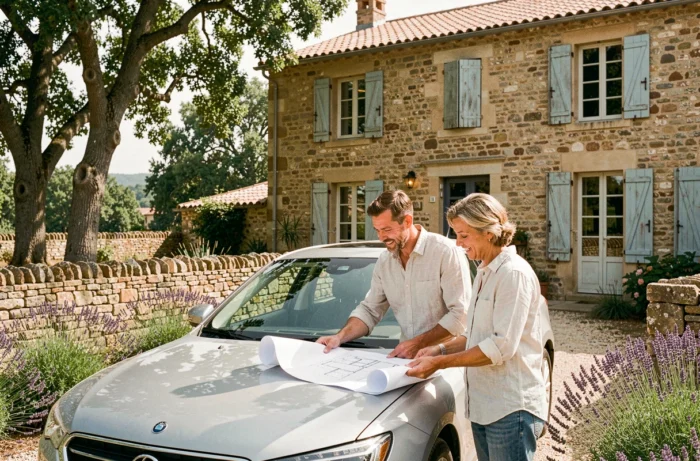
The South-West of France attracts new buyers every year, but the real estate market in this area does not form a homogeneous block. Price gaps between Bordeaux, the Basque Country, and the Landes are widening, and the conditions for purchasing new properties remain marked by a crisis that has lasted for several quarters. Understanding these disparities before diving in changes the trajectory of a real estate project in the South-West.
Price Gaps in the South-West: Comparing Bordeaux, Basque Country, and Landes
Typical content presents Nouvelle-Aquitaine as an attractive and accessible market. The reality is more contrasted: the sub-markets of the region are evolving in opposite directions.
| Sector | Price Trend (2025-2026) | Dominant Buyer Profile |
|---|---|---|
| Bordeaux Metropolis | Moderate decline | First-time buyers, rental investors |
| Basque Country (Bayonne, Biarritz) | Continuous increase | Second homes, mobile executives |
| Inner Landes | Relative stability | Families, construction projects |
| La Rochelle / Charente coast | Increase | Second homes, retirees |
Bordeaux is experiencing a correction after several years of strong growth. This decline opens up negotiation margins, particularly for older properties in need of renovation. In contrast, the Basque Country and La Rochelle continue to see their prices rise, driven by demand for second homes.
The Landes, on the other hand, offer a more readable market. Prices per square meter remain significantly lower than those in Bayonne or the Basque coast. For a house project with land, this department deserves a detailed analysis, including through locally established professionals like those listed on https://www.ldlimmobilier.fr/ who cover this sector.

New Housing Market in the South-West: A Crisis That Changes the Game
The new housing sector is going through a difficult period across France, and the South-West is no exception. The year 2025 has been described as a “black year” for new housing, with a marked decline in reservations by individuals.
The situation is partially evolving in 2026. New housing listings are increasing by about 10% in the second quarter of 2026 compared to the previous quarter. This uptick means more available programs and, for buyers, an increased capacity to negotiate with pressured developers.
What This Means for Buying New Properties
- The supply is expanding, allowing for the comparison of more programs before committing, especially in cities like Bayonne or Pau where developers are relaunching projects
- Delivery times remain a point of caution: some programs launched during the crisis carry a risk of delays or changes to the schedule
- The financial viability of the developer must be verified before signing, as the risk of default remains high in a still fragile market
For a project to build a single-family home in the Landes or Gironde, the dynamics differ. Local builders have land available, and land prices in rural or suburban areas have not experienced the same inflation as on the coast.
Rental Investment in the South-West: Tight Areas and Rent Control
A real estate project in the South-West is not limited to purchasing a primary residence. Rental investment represents a significant portion of transactions, particularly in Bordeaux and university towns.
Bordeaux is among the areas subject to rent control, which limits gross returns but secures rental demand. The tight areas of Nouvelle-Aquitaine concentrate strong rental demand, driven by population growth and the influx of students or young professionals.
Second Homes: Rising Holding Costs
The South-West, particularly the Basque Country and the Arcachon Basin, attracts buyers of second homes. The holding costs for these properties are increasing: property taxes are rising in several municipalities, and taxation is reinforced in tight areas where municipalities can increase the housing tax on second homes.
A secondary property in a tight area costs significantly more to hold than it did three years ago. This factor must be included in the profitability calculation, whether the goal is asset-based or seasonal rental.

Climate Risk and Real Estate Prices: The Heatwave Factor in the South-West
Repeated heatwave episodes are beginning to weigh on buyers’ decisions. In the most exposed areas of the South-West, particularly sectors far from the Atlantic coast, intense summer heat alters the perception of quality of life.
Recent analyses show that heatwave episodes influence real estate prices downward in certain inland areas. Properties without air conditioning, poorly insulated thermally, or located in dense town centers are losing relative attractiveness compared to properties benefiting from natural ventilation from the coast or the Pyrenean altitude.
This criterion remains secondary in the purchasing decision compared to price or location. However, it is gaining weight year by year, and a real estate project in the South-West benefits from incorporating the thermal performance of the building into the property evaluation.
The real estate market in the South-West is now read at multiple speeds: Bordeaux correction, persistent tension on the Basque and Charente coasts, and stability in the Landes. Cross-referencing location, project type (primary residence, rental, secondary), and local price trends remains the most reliable filter before any commitment.