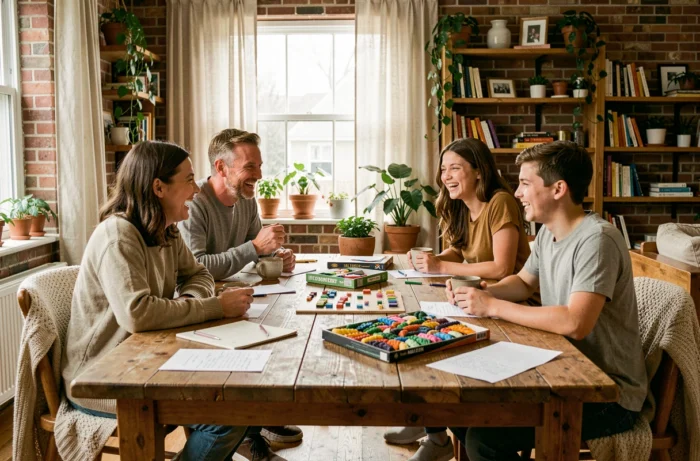
Family moments in daily life are becoming rarer due to desynchronized lifestyles. A report from Anses published in September 2026 reminds us that between half and three-quarters of workers experience atypical hours (evenings, weekends, long shifts), which concretely reduces the time shared with children and partners. At the same time, a survey by OpinionWay for HelloFresh indicates that about a third of parents admit to often being distracted by their phones during meals.
These two observations raise a practical question: how can we recreate unforgettable family moments without waiting for holidays or weekends? The following ten ideas focus on activities that can be done on a weekday evening, requiring little equipment, and adaptable to various age groups.
1. Themed quiz night without screens
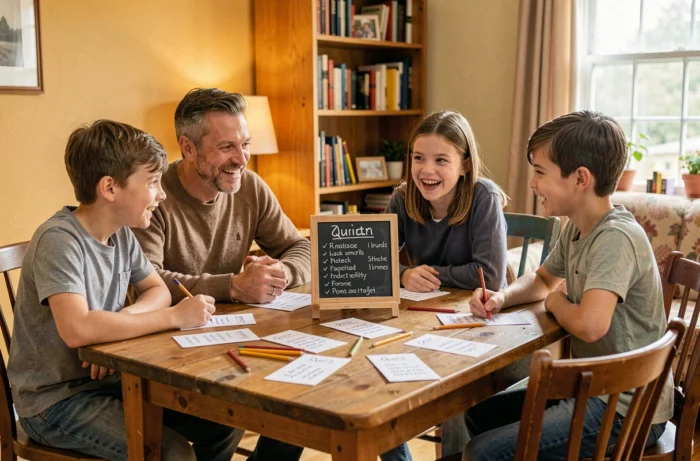
Each family member prepares five questions on a subject they know well: animals, geography, cooking, sports. Two mixed teams are formed (one parent with one child), points are recorded on a sheet, and the game lasts about thirty minutes. The interest lies in the asymmetry of knowledge: children often surpass adults in their passions.
To refresh the format, one can alternate between multiple-choice quizzes, questions with hand-drawn images, or a round of “mime the answer.” The absence of screens during this ritual creates a sharp contrast with the rest of the day, enhancing mutual attention.
2. Cooking workshop with four hands on Wednesday evening

Cooking together goes beyond just preparing a meal. A themed menu (crepes, homemade pizza, tacos) adds a festive touch to an ordinary evening. The child chooses the recipe, divides the tasks, and the parent supervises without directing. Cooking workshops encourage informal exchanges that traditional meals don’t always produce.
The format works from four or five years old for simple tasks (mixing, topping). Beyond ten years, entrusting the entire recipe to the child reverses the usual dynamic and values their autonomy. Resources like the Jolis Mômes website offer age-appropriate family activity ideas that can inspire these evenings.
3. Express treasure hunt in the apartment
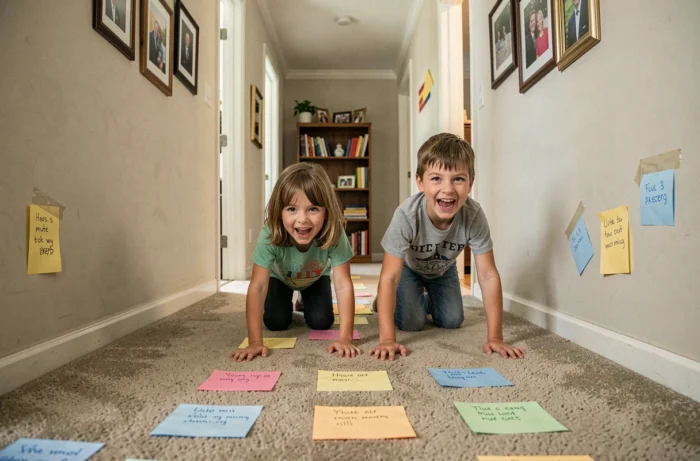
No need for a garden or two hours of preparation. Five clues written on post-its, hidden from room to room, are enough for a fifteen-minute treasure hunt. The treasure can be a dessert, the choice of the evening movie, or a small symbolic object.
What makes the activity renewable is assigning the design to a different child each week. The child creating the clues develops their logic and writing while having fun. Parents become the seekers, breaking the usual authority dynamic.
4. Creative challenges in five minutes flat
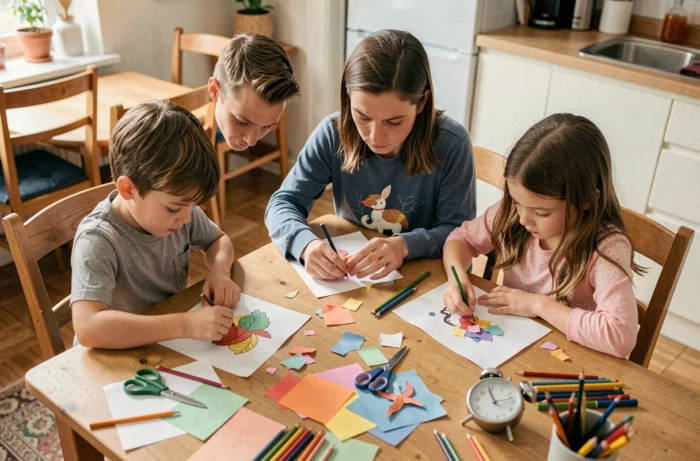
Drawing an animal with closed eyes, building the tallest tower with living room objects, inventing a song about a randomly drawn word: short creative challenges can fit into any downtime. Five minutes is enough, and the time constraint eliminates the pressure of the result.
You can create a jar of challenges filled with small papers. Each evening, a family member draws one. This few-minute ritual creates a daily appointment without heavy organization.
5. Neighborhood photo walk

Going out for a walk together with a photographic assignment transforms a simple stroll into an observation game. Today’s theme: “everything round,” “the most original doors,” “textures of the ground.” Everyone uses a camera or a phone, and they compare the photos upon returning.
The photographic goal forces you to slow down and look at a familiar route differently. Children notice details that adults no longer see. You can print the best photos once a month to create a memory album of daily life.
6. Read-aloud evening relay

Reading a novel or picture book aloud, passing the relay every two pages, involves every family member. The format suits both reading children and younger ones who listen. One chapter per evening creates a family serial that makes everyone want to reunite the next day.
The choice of book is made together, by vote. Alternating between an adventure novel, a child-friendly detective story, and a comic book maintains variety. This ritual effectively replaces evening screen time without generating frustration, as long as the chosen book appeals to everyone.
7. Collective memory book
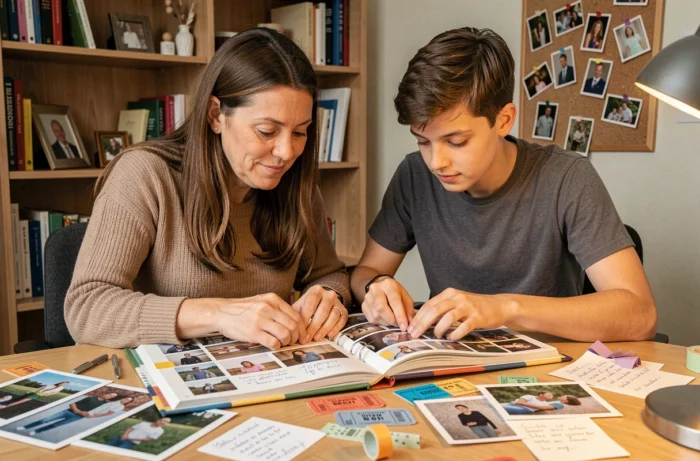
A notebook left permanently on the coffee table, in which everyone notes or draws a significant moment from the day, constitutes a concrete family memory. No specific format rules: a word, a sketch, a glued ticket, a funny phrase heard at school.
Rereading this notebook a few months later produces a surprise effect. Everyday memories that no one would have retained resurface and spark conversations. The tactile paper format contrasts with digital photos that are never looked at.
8. Monthly family board game tournament
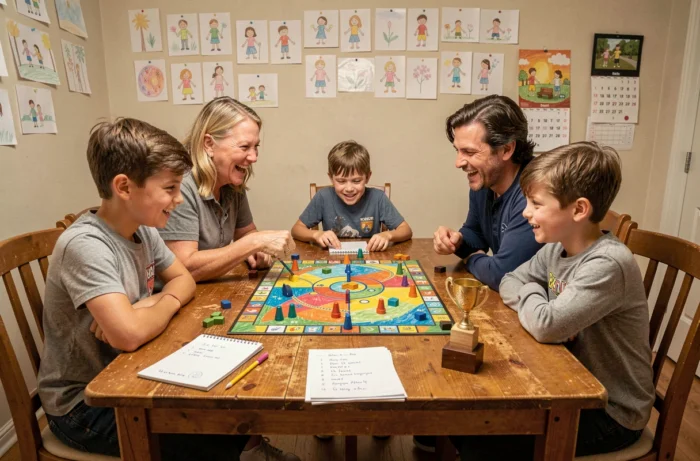
Rather than an isolated game, organizing a monthly tournament with rankings creates a long-term dynamic. A different game is chosen each month. Points accumulate, and a small symbolic trophy (a decorated wooden spoon, a cardboard badge) rewards the winner.
This format adds stakes to games that children sometimes abandon after a few rounds. It also teaches how to lose over time, as the rankings balance out from month to month.
9. Nighttime observation session from the balcony

Observing stars, the moon, or passing airplanes requires no specific equipment. A blanket, a warm drink, and ten minutes on the balcony or in the garden are enough. You can download a sky map to identify visible constellations depending on the season.
This shared moment of calm breaks with the hustle and bustle of daily life and opens up unexpected conversations. Children ask questions about space, time, distance, that the usual rhythm of the day doesn’t allow to emerge.
10. Family time capsule to open in a year
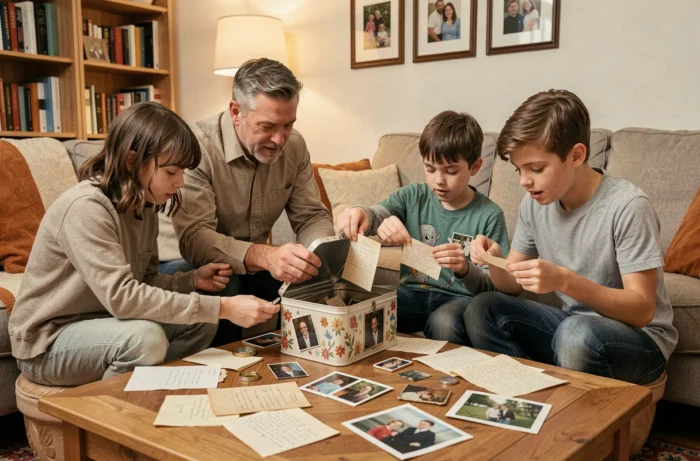
Each family member slips an object, a drawing, a letter to themselves, or a prediction for the following year into a box. The box is sealed with an opening date. The ritual takes about twenty minutes and is only done once a year, giving it a special occasion feel.
Opening it twelve months later reveals how much the children have changed, what each has forgotten they wrote, and what has or hasn’t come true. It’s an exercise in collective memory that anchors the family in a shared temporality beyond the daily routine.
None of these activities require a special budget or complex arrangements. Their common point lies in regularity: a short, repeated ritual produces more memories than an exceptional outing that is quickly forgotten. The challenge remains to protect these time slots against the fragmentation of schedules, especially when atypical hours reduce common time between parents and children.